How Storio Group uses Uptime Labs to foster a strong incident response culture
Ready to make incident response your competitive advantage?
See how Uptime Labs builds provable, scalable incident response capability across your financial services organisation.
Storio Group, a leader in the personalized photo gifting industry, experiences significant seasonal variations in demand. These fluctuations make reliability critical, especially during peak times like Black Friday and the winter holiday season. The stakes are high — downtime during these periods can cost anywhere from thousands to hundreds of thousands of euros per hour. Recognizing this, Storio Group sought to improve its incident management processes to ensure resilience and protect its customer relationships.
The Challenge
In early 2022, Storio Group faced the complex task of integrating two distinct technology stacks and organizational cultures following the merger of Albelli and Photobox. A key challenge was establishing a unified, coherent approach to incident management while maintaining operational reliability. Their goal was to build a technology organization where incident response capabilities weren’t siloed to a single team but distributed across the engineering community.
According to Alex, this required a shift in mindset: “ESective incident response is as much a cultural challenge as it is about technology and tooling. How organizations think about incidents and how they organize, communicate, problem-solve, and learn under stress is just as important as the tools they employ.”
To fast-track readiness for the busy holiday season, Storio Group partnered with Uptime Labs to create a culture of preparedness and continuous learning within its engineering teams.
The Solution
Uptime Labs provided Storio Group with a realistic, simulation-based training environment tailored to their specific needs. Engineers participated in 33 simulated incidents over an eight-week period. The scenarios were designed to replicate real-world challenges, enabling engineers to practice responding to incidents in a safe but immersive setting. This hands-on approach replaced traditional training methods, such as spreadsheets and tabletop exercises, which lacked the intensity and realism needed to develop practical skills.
“By simulating effectively — an environment close enough to our real world — we allow teams to understand the nitty-gritty of how to respond,” says Alex. “One of our engineering leaders described his first Uptime Labs training session as hitting 160 bpm on his heart rate because the adrenaline was really running. That realism helps build muscle memory and a repeatable set of great behaviors.”
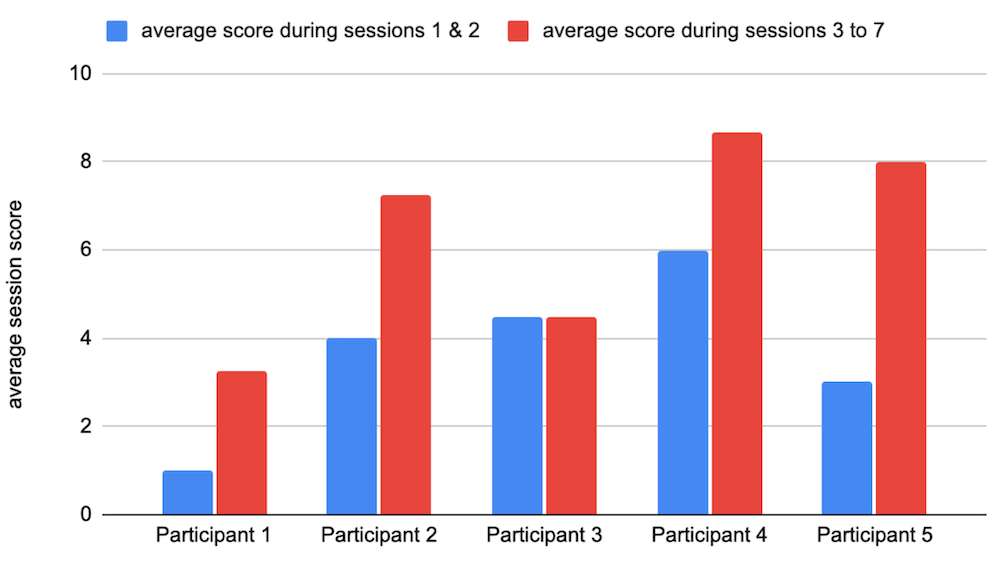
Participant improvement between initial and later sessions
Key Benefits
1. Enhanced Incident Visibility
Before using Uptime Labs, many low-severity incidents went unreported, limiting opportunities for learning and improvement. Since adopting the platform, Storio Group has seen a threefold increase in reported lower-severity incidents.
“You might say that’s a bad thing,” Alex explains, “but from my perspective, it’s a really good thing. These incidents always existed—we just didn’t see them. Now, we can track, analyze, and share learnings across teams, ensuring continuous improvement.”
2. Improved Skills Across All Levels
Uptime Labs has fostered a noticeable maturation in how incidents are managed. Senior engineers have become adept at leading incidents, managing stakeholders, and communicating eSectively, while junior engineers have honed their roles as responders.
“Those that hadn’t done incident management before had their eyes opened. It helped them understand not only what being an Incident Manager is like but also how to better respond to Incident Managers,” says Alex. “For us, it’s been a real driver of engagement. Everyone who has gone through Uptime Labs has loved the experience and asked for more.”
3. Maintained Performance Under Pressure
During a major platform migration that centralized all photo brands under one system, Storio Group closely monitored its mean time to resolution (MTTR) for severity 1 and 2 incidents. Thanks to Uptime Labs training, they maintained MTTR performance levels despite the added complexity.
“For me, that’s a huge success,” Alex remarks. “It shows that even through a transformative period, our engineers were prepared to handle incidents eSectively.”
4. Building a Culture of Continuous Improvement
Uptime Labs has helped embed incident response as a core competency across the organization. Engineers now take incidents more seriously, with a clear understanding of communication protocols, stakeholder management, and post-incident learning.
“We’ve been able to create a set of people who are really excited about what the future of incident management could be, just by having experienced the Uptime Labs piece,” says Alex. “It’s been a pleasing eSect and exactly what I hoped for.
The Role of Realistic Training
Unlike conventional training methods, Uptime Labs immerses participants in scenarios that mimic the pressure and complexity of real-life incidents. This has proven invaluable in preparing engineers to handle high-stakes situations.
“Without these simulations, all we would have been doing was a bad facsimile of what an incident was like,” says Alex. “With Uptime Labs, we’re able to put someone back in that moment—panicking stakeholders, unanswered questions—and allow them to develop those skills meaningfully.”
Quantifiable Results
Storio Group tracks performance improvements through metrics such as incident visibility and MTTR. During the initial eight-week engagement with Uptime Labs:
- 4 out of 5 participants showed significant overall improvement in their incident management skills.
- Incident reporting increased, allowing for more comprehensive data collection and learning opportunities.
- MTTR dropped from 66% (4h 33m to 1h 30m).
Additionally, the program’s impact extended beyond individual performance. Storio Group has seen improved collaboration and a shared sense of ownership among engineering teams, which has strengthened their overall resilience.
Protecting Revenue When it Matters
Uptime Labs’ training came in clutch during one of the most notoriously stressful times of the year.
According to Alex: “Black Monday could have cost us millions. Instead, we protected €4.5M in revenue — because Uptime Labs helped us build a process that kept us proactive when it mattered most.”
A Trusted Partner
Storio Group values Uptime Labs not just as a vendor but as a partner. Over the course of their collaboration, Uptime Labs has worked closely with the team to evolve the platform and address specific challenges.
“They’ve understood our needs and challenges, and together, we’ve evolved the platform to create a massive impact on our engineering community,” Alex notes.
Next Steps
Looking ahead, Storio Group plans to democratize access to Uptime Labs across its engineering teams, making it a self-service tool that empowers engineers at all levels to practice and improve.
“We want to be the best responders when things go wrong,” says Alex. “By investing time and focus, we can get better every day and continue on our journey to becoming an amazing engineering organization.”

Incidents aren’t just about muscle memory, they’re a cultural thing, how you think, how you respond, how you manage stakeholders, which makes it really hard to train. You need something that’s close to a real event.