The Best Incident Response Training Providers (A 2026 Guide)


Ready to make incident response your competitive advantage?
See how Uptime Labs builds provable, scalable incident response capability across your financial services organisation.
Why “Tabletop” isn’t enough anymore, and how to choose the right training for your team.Downtime is the single most expensive problem in modern business. Recent data shows that for $400 billion annually, or roughly 9% of profits.During high-pressure security incidents, clear direction from cybersecurity leadership is crucial for guiding both technical and management teams and ensuring effective communication with stakeholders.When your systems go dark, your team’s reaction speed (Mean Time to Resolution, or MTTR) determines the financial damage. Yet, most companies still train for these high-stakes moments using methods from 20 years ago: classroom lectures and PowerPoint slides.Although there isn't one single 'best' provider, in this short guide we outline some of the best incident response training providers and options on the market, from modern simulation platforms like Uptime Labs to traditional consultancy firms. If your focus is specifically on cybersecurity, see our dedicated guide to cybersecurity incident response training platforms.
A Quick Introduction to Incident Response
Incident response is at the heart of modern cyber security, serving as the frontline defence against cyber attacks, data breaches, and other forms of malicious activity. When a security incident occurs, incident response teams must act quickly and decisively to contain the threat, minimise damage, and restore normal operations. This requires a deep understanding of incident response techniques, threat intelligence, and digital forensics, as well as the ability to adapt to evolving cyber threats.Effective incident response is not just about reacting to incidents as they happen—it’s about being prepared. This is where incident response training becomes essential.. Through targeted training, teams and individuals gain the skills needed to identify, analyse, and respond to security incidents with confidence. Incident response certifications further validate this expertise, demonstrating a commitment to best practices and continuous improvement. Threat intelligence also plays a crucial role, providing the context and insights needed to anticipate and counteract sophisticated attacks.In short, incident response is a dynamic discipline that demands ongoing learning and practice. Investing in high-quality training ensures that your team is ready to face the full spectrum of cyber threats, equipped with the essential knowledge and hands-on experience to protect your organisation.
The Benefits of Incident Response Training
Incident response training delivers significant value for security professionals, risk management professionals, and incident responders seeking to strengthen their ability to manage security incidents.By participating in comprehensive training, individuals develop a deep understanding of incident response techniques and learn how to handle incidents effectively in real world situations. This hands-on experience is critical for building the confidence and skill set required to respond to complex cyber security challenges.Training also prepares participants for incident response certifications, which are highly valued in the industry and often provided by experienced training providers. These certifications not only validate technical expertise but also demonstrate a commitment to professional development and risk management best practices. For organisations, investing in incident response training helps build a resilient security posture, reduces the likelihood and impact of security incidents, and ensures that incident response management processes are both effective and up to date.Ultimately, incident response training empowers security professionals to handle incidents swiftly and efficiently, protecting both business assets and personal lives from the consequences of cyber threats.
The 3 Types of Incident Response Scenarios Training
Before looking at the vendors, it is important to understand what you are buying. The market is typically split into three distinct categories:
1. The "Flight Simulator" (Modern)
- What it is: Hands-on, technical simulation. Engineers are dropped into a broken environment (e.g., a clone of your tech stack) and must fix it using real logs, metrics, and terminals. These simulations often include a deep dive into technical troubleshooting and incident response scenarios, providing a unique learning experience through hands-on labs and real-world problem solving.
- Best for: SREs, DevOps, and L2/L3 engineers who need to build "muscle memory" — particularly when training junior engineers for on-call rotations.
- Provider example:Uptime Labs.
2. The "War Room" Tabletop (Traditional)
- What it is: A discussion-based exercise. A facilitator presents a scenario (“We have been hit by ransomware”), and executives discuss the legal, PR, and high-level technical response. No keyboards are touched.
- Best for: C-Suite, Legal, and PR teams testing decision-making chains and improving incident management processes among leadership teams.
- Provider example:Kroll or Mandiant.
3. The "Academic" Bootcamp (Certification)
- What it is: Classroom learning (virtual or in-person). Heavily focused on theory, definitions, and individual certification exams, with a rigorous certification process involving comprehensive training and examination to test practical incident response skills.
- Best for: Individuals trying to break into the industry or gain a specific credential (e.g., GCIH), especially those aiming to become certified professionals with industry-recognized qualifications.
- Provider example: SANS Institute. These bootcamps cover the key concepts required for industry-recognized certifications.
Top Incident Response Training Providers
1. Uptime Labs
Best For: Engineering teams (SRE/DevOps) who need realistic technical practice.
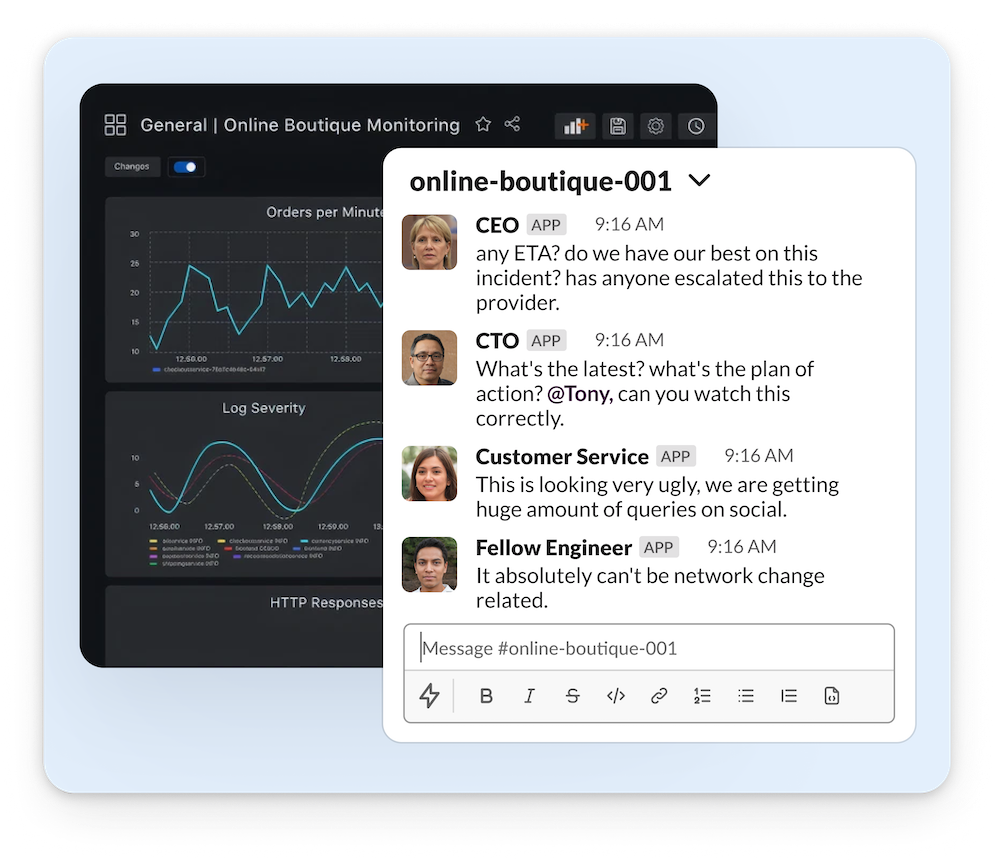
Uptime Labs is the category leader in Incident Simulation. While other providers focus on talking about incidents, Uptime Labs focuses on fixing them. Their platform acts as a “gym” for your on-call teams, generating realistic technical failures (latency spikes, database locks, cyber breaches) that your team must debug and resolve in a live, safe environment. Uptime Labs helps teams develop the skill sets required to respond to a variety of cyber incidents by simulating real-world scenarios and challenges.
- The “New School” Advantage: It solves the “Spectator Problem.” In traditional tabletop exercises, the loudest person talks while everyone else nods. In Uptime Labs, every engineer is active, querying logs and checking graphs.
- **Core Feature:**AI Auto-Coaching. The platform analyzes the team’s investigation path and communication patterns, offering instant feedback on how to solve problems faster next time.
- Verdict: The only choice for technical teams who want to lower MTTR.
2. IBM X-Force Command
Best For: A premium, “destination” experience for executives.

IBM offers one of the most famous “Cyber Ranges” in the world. It is a physical experience—teams often fly to their facilities (like the one in Cambridge, MA) to sit in a Hollywood-style Security Operations Center (SOC). The training is specifically designed to enhance cyber incident management skills among executive teams, preparing them to lead and manage responses to cybersecurity incidents.
- The Approach: Highly immersive and gamified. They use physical props, fake news broadcasts on TV screens, and high-pressure scenarios to stress-test your executive team’s crisis management. The program is known for its exceptional course content, including interactive exercises and practical activities that reinforce learning throughout the experience.
- Limitations: It is incredibly expensive and logistically difficult (requires travel). It is a “once-a-year” event, not a continuous learning habit.
3. SANS Institute
Best For: Individual certification and deep academic theory.

SANS is the gold standard for individual knowledge. SANS offers specialized courses in network security and incident handling, which are particularly beneficial for system administrators seeking to enhance their skills in managing and responding to security incidents. If you have a junior analyst who needs to understand the fundamental theory of malware analysis or forensics, you send them to SANS.
- The Approach: Week-long intensive bootcamps (often costing $8k+ per seat).
- Limitations: It focuses on the individual, not the team. A certified genius can still fail if they don’t know how to communicate with their team during an outage.
4. Kroll
Best For: Legal and compliance-focused tabletop exercises.Kroll is a legendary name in corporate risk. Their training is aligned with IT governance best practices and prepares organizations to effectively manage cybersecurity incidents. Training is delivered by consultants who have managed some of the world’s largest data breaches.
- The Approach: They interview your stakeholders and design a custom paper-based scenario. Then, a senior consultant comes to your office to moderate a 4-hour discussion.
- Limitations: It is analog. There are no “logs” to check. The success of the session depends entirely on the charisma of the moderator.
5. Black Hills Information Security (Backdoors & Breaches)
Best For: Low-cost, gamified engagement.Black Hills created “Backdoors & Breaches,“ a popular Incident Response card game. The game simulates attacks by different threat actors, providing IR teams with a fun way to practice their response skills. It’s a fantastic icebreaker and a low-stakes way to get people thinking about security. The game can be tailored to include scenarios relevant to critical infrastructure and is also suitable for network administrators looking to improve their incident response capabilities.
- The Approach: A card deck determines the “Attack” and the “Defense.” Teams roll dice or play cards to see if their defensive controls work.
- Limitations: It relies on RNG (Random Number Generation) rather than skill. Rolling a 20-sided die to “detect malware” is fun, but it doesn’t teach you how to actually grep through a Splunk index to find it.
Comparison Table: The "Old School" vs. The "New School"
Here’s a quick comparison table breaking down the main differences between the traditional approach of consultants and academic courses vs the more modern approach of realistic simulations built on SaaS platforms. FeatureUptime LabsTraditional Consultants (Kroll/Mandiant)Academic (SANS)FormatSaaS Platform (Flight Simulator)In-Person/Zoom Discussion (Tabletop)Classroom / LectureActive Participation100% (Hands-on Debugging)10% (Only senior leaders speak)Passive (Listening/Note taking)FrequencyContinuous (Monthly/Weekly)Annual (Once per year)Ad-hoc (Once per career)Skill TestedTroubleshooting & Muscle MemoryDecision Making & PolicyTheoretical KnowledgeCost ModelSubscription (Scalable)Expensive Day RatesPer-Student FeeFor a deeper look at this distinction, see our guide to tabletop vs live incident response.
Digital Forensics in Incident Response Training
Digital forensics is a cornerstone of effective incident response training, equipping incident responders with the skills to investigate and understand security incidents in depth. Through digital forensics, professionals learn how to collect, analyze, and preserve digital evidence, including log data and network traffic, which is essential for uncovering the root cause and full impact of an incident.Incident response training that incorporates digital forensics provides a comprehensive understanding of how cyber attacks unfold and how to trace malicious activity across complex environments. By mastering these techniques, incident responders can not only resolve current incidents but also implement measures to prevent future occurrences. Training in digital forensics ensures that security teams are prepared to handle incidents with precision, supporting both immediate response efforts and long-term cyber security strategies.
Buyer's Guide: 3 Questions to Ask Before You Buy
If you are at the stage of evaluating vendors, ask them these three questions to help you cut through some of the marketing fluff:1. "Does this test my team's plans or their skills?"
- Traditional: Tests the plan (e.g., "Do we have a phone number for Legal?").
- Uptime Labs: Tests the skill (e.g., "Can the on-call engineer follow the runbook and identify the bad SQL query before the database melts?").
2. "Is this a 'One-and-Done' event?"
- Muscle memory fades. If you only practice incident response once a year (typical with Kroll/IBM), your team will be rusty when a real incident hits 6 months later. Look for platforms that allow for continuous drills.
3. "How do you measure success?"
- Avoid vendors who measure success by "attendance" or "completion certificates."
- Look for vendors who measure MTTR (Mean Time To Resolution), Diagnosis Time, and Team Sentiment.
To Summarise
The era of the "annual tabletop" is ending. In a world where 99.99% uptime is the expectation, teams need to practice like they play.The traditional model of IR training is being overhauled by more modern and realistic platforms that treat Incident Response as a true active skill rather than some certification you need to renew every year. So from our perspective:
- Choose Kroll or IBM if you need to impress the Board of Directors once a year.
- Choose Uptime Labs if you want to sleep better at night knowing your team can handle anything the internet throws at them.
Peter Catack (Community Contributor)