
Training Incident Responders & Scaling Incident Response Teams
Most organisations make mistakes when finding the right people, the right format for the team,or giving them the resources they need to succeed....
... Luckily, Vanessa Huerta Granda's doc is designed to help organisations unlock talent for better incident outcomes.
Vanessa's content covers:
- Why incidents are not purely technical problems: they are sociotechnical ones
- What an Incident Commander actually does
- Common mistakes organisations make when selecting ICs
- How to identify the right talent
- How to train and scale an IC function sustainably
Trusted by teams building world-class incident response












About this doc
It's free, practical and skips the theory in favour of what actually works: spotting IC talent early, avoiding the most common selection mistakes and building a training progression that doesn't burn your best talent out.
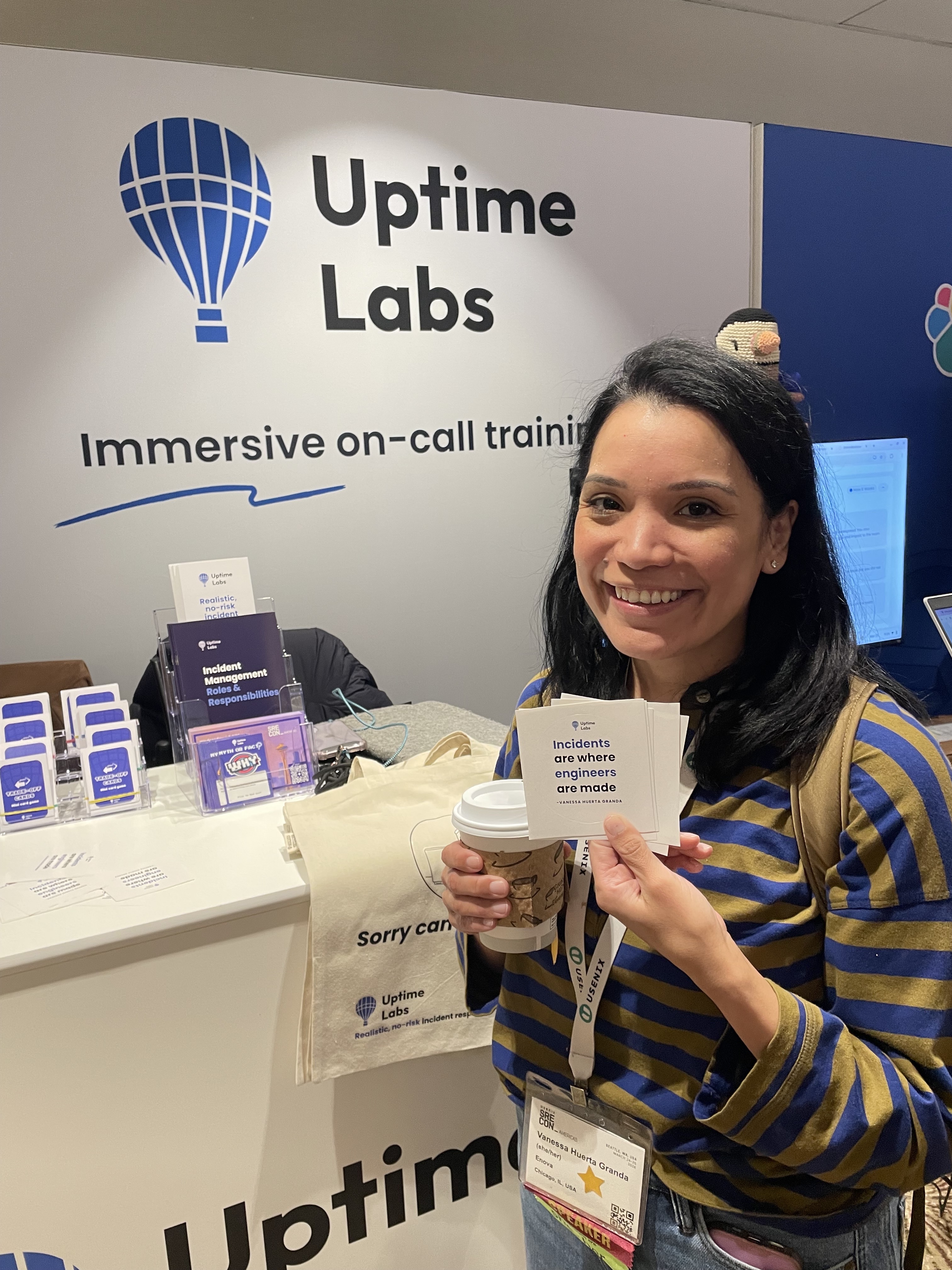
Vanessa Huerta Granda
Incidents are sociotechnical events
Incidents are sociotechnical events. The technical problem is only half the story. The other half is coordination, communication and decision-making under pressure.
This template, written by Vanessa from her experience building IC programs across multiple engineering organizations, is key to understanding how you can manage both halves well.
Avoid the Errors Ensuing Without an IC
Without a dedicated IC (or team), incident response defaults to whoever is loudest, most senior or on-call that day. The result? Burnout, inconsistent outcomes and mistrustful stakeholders.
Scaling to the needs of your team
Whether you're standing up an IC function for the first time or consolidating something that's been running informally for years, this guide meets you where you are.
It's written for engineering leaders who want a sustainable program, not just a few heroes carrying the whole slack.


FAQ
Who is this template designed for?
.svg)
The template covers multiple IC program structures, including lightweight models suited to smaller teams or lower incident volumes. The core principles of clear communication, role separation,and coordination apply regardless of the team size or incident frequency.
Is Vanessa's guide still relevant if we're a small team with limited incidents?
The template covers multiple IC program structures, including lightweight models suited to smaller teams or lower incident volumes. The core principles of clear communication, role separation,and coordination apply regardless of the team size or incident frequency.

Ready to make incident response your competitive advantage?
See how Uptime Labs builds provable, scalable incident response capability across your financial services organisation.