Ready to make incident response your competitive advantage?
See how Uptime Labs builds provable, scalable incident response capability across your organisation.
Every outage ends eventually:
Slack is silent. The dashboards goes back to green. I book a retro into a calendar event. But long after the incident itself is fixed, one thing stays with the team: how you behaved while it was still live.
That is the fifth principle in my CTO series, and it might be the one that matters most. Incidents are leadership moments. They are not distractions from the roadmap, or disruptions to product velocity. They are not merely outages to be patched. They are the moments where your stated values either hold up or fall apart, in front of the exact team you are trying to build that culture with.
1. Incidents are a test you can’t fake
Ask any leader what kind of culture they want to run, and you’ll likely get the same answers:
Calm. Curious. Blameless. Supportive.
Those words are temptingly easy to say in a strategy session. They get much harder to live out at 2am, with customers affected and no fix in sight.
That gap between the values in the Google Doc and the behaviour in the incident channel is exactly why this moment matters so much. You cannot fake it under pressure. Whatever shows up when things break is the real culture, not the one you’ve written down.
2. Support over blame, even when it is expensive
Every company I have worked with, including mine, has inevitably had its share of incidents.
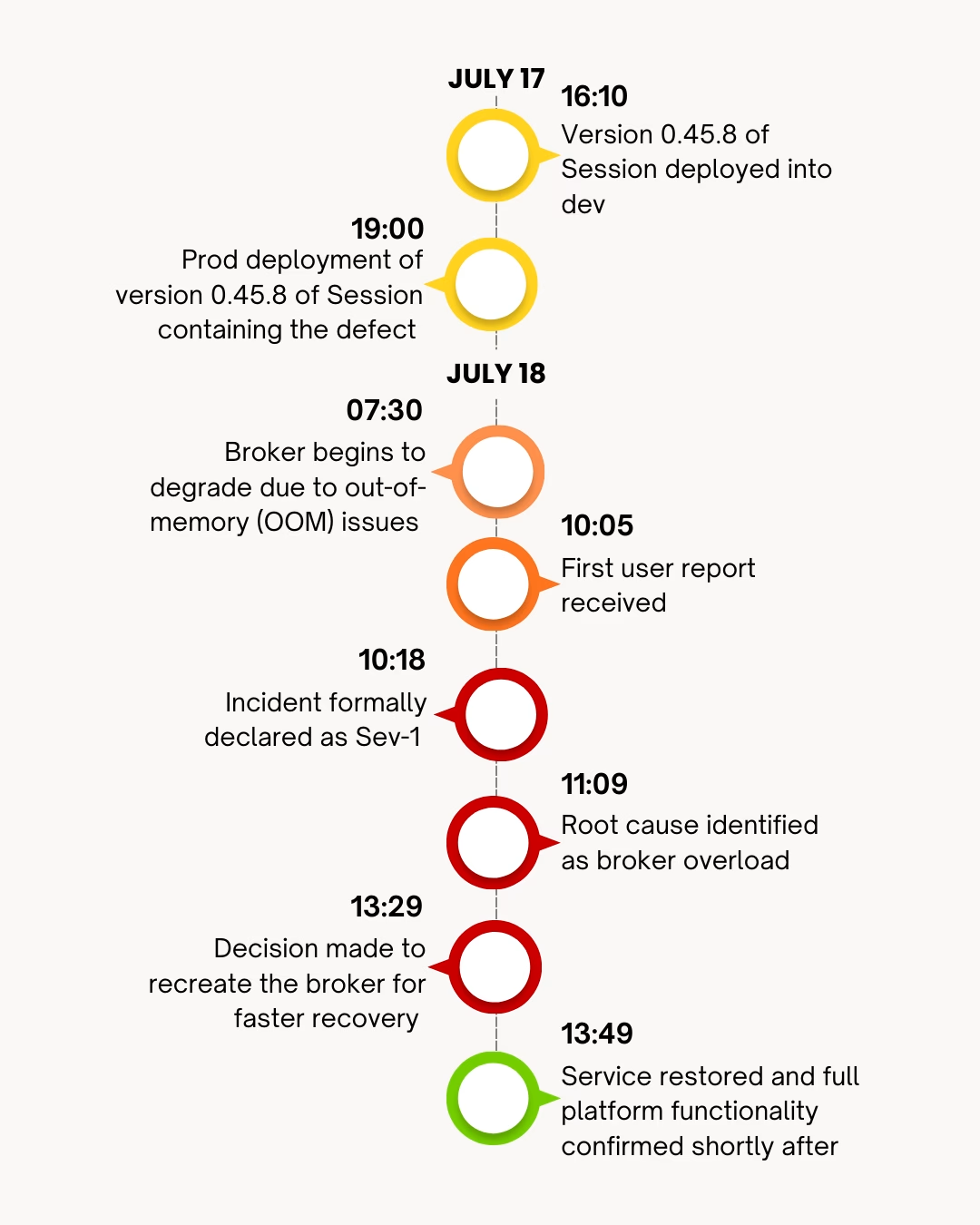
A historic artefact: a timeline of an incident Uptime Labs had last summer
Leaders use incidents as a flywheel for improvement. Culturally, they set the bar to learn from the incident. They take the lessons seriously, apply them across the org and give everyone touched by the incident real room to learn and improve.
That is easy to say when nothing is at stake. It gets much harder when the incident has a price tag attached: lost revenue, a damaged relationship, an uncomfortable call with a customer, etc.. In that moment, blame is the cheap option, but unrewarding in the long term.
Here at Uptime Labs, when an incident impacts our business, we use the post-incident to identify areas for improvement and make them concrete, actionable, and focused on follow-through. Consciously choosing a constructive, rather than an accusatory approach, is what makes a blameless culture real instead of performative (my colleague Karan writes very well about this here).
3. Your customers are grading you too
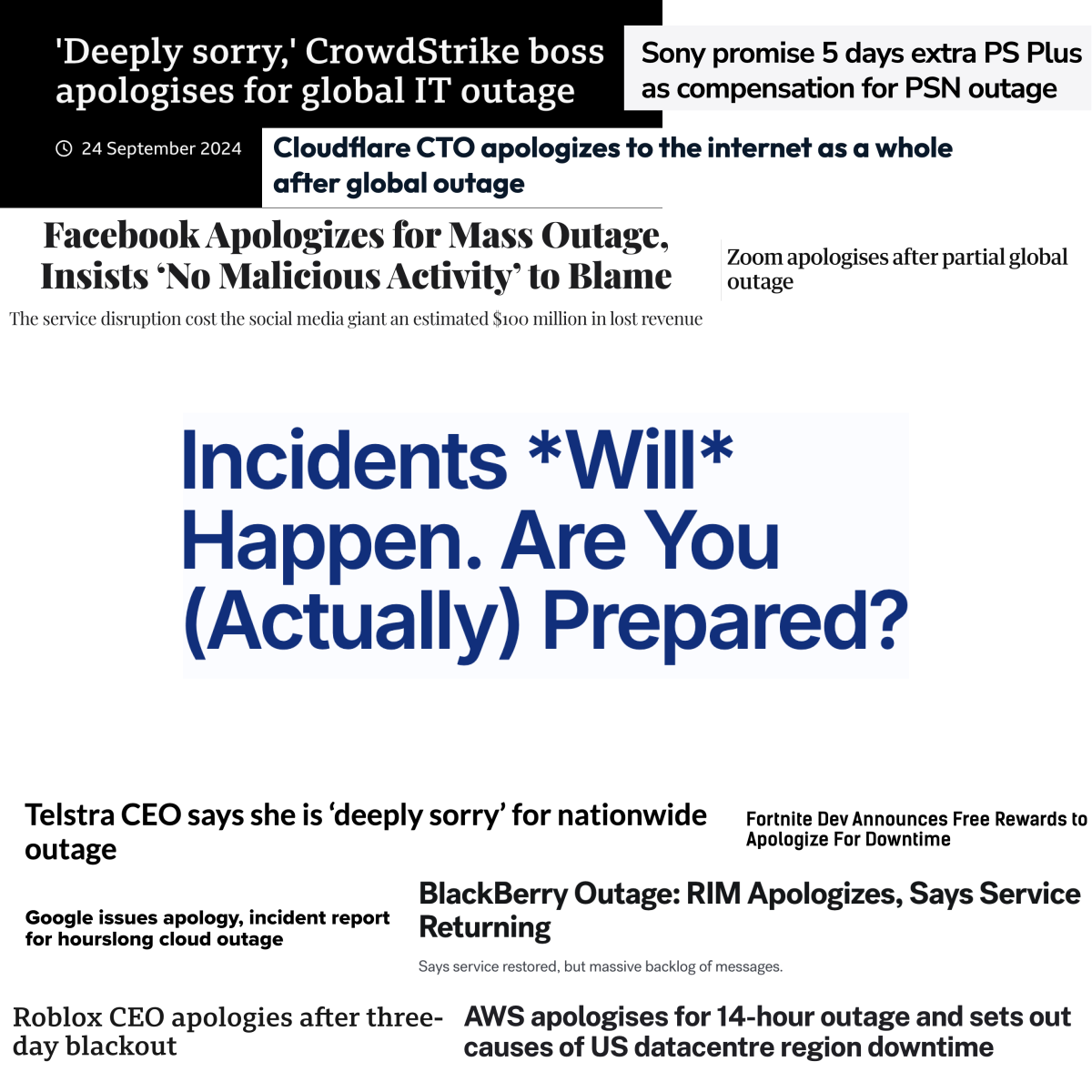
Incidents are inevitable: it’s how you react to them that's key. Customers appreciate it when you hold your hand up and take accountability. What they will not forgive is silence, spin or a company that treats them like they should not have noticed.
How you communicate after an incident is a direct test of the relationship. Get it right, tell people what happened, what you are doing about it, and when they can expect an update, and you can come out of an outage with more trust than you had going in. Get it wrong, and the technical fix stops mattering. The story people remember is the excuses and cover-up, not the outage.
So it’s an opportunity for you as an organisation to show your maturity and to build trust with your customer, because how you react is very important and how you communicate that to them directly. So potentially over the long term, it actually helps you to build up more trust with your customer. They can see you actually becoming more resilient and taking the lessons learned from the incident.
4. What your team actually learns from watching you
Staff do not learn your values from the company handbook. They learn them by watching what you do the moment something goes wrong. Every incident is a live demonstration, whether you plan it that way or not.
When I walk into an incident, I try to treat it as the moment to prove the culture I claim to want, not an unwelcome interruption to it. That is not a performance. It is the only way the rest of the organisation gets to see leadership in practice instead of in principle.
For example, we had a recent incident whereby I had to step in and help out by addressing the action plan. Again, I emphasise: at no moment was there any sense of blame. It was all about driving improvements forward.
One of our core principles as a company is that errors and mistakes belong to the system, not people. Look at the circumstances that allowed the mistake to happen, rather than blaming the person.
Leading through the ones you cannot avoid
Incidents are not going away. They are a feature of running complex systems, not a bug in your process. On top of this, these systems are now outside our control with third parties, meaning that difficult incidents are a when, not an if.
As a leader your role is to make sure that when incidents do occur you are the ambassador of a blameless culture. Ensure that the lessons learnt from the incident are fed back into the company so that they can be used to improve your overall incident management. To quote John Allspaw, ‘Never waste a good incident…. it’s an unplanned investment opportunity.’

Joe Mckevitt

.png)

.png)
.png)